A concrete swimming pool shell lives in consistent settlement with the soil around it. When that soil steps, reduces, swells, or saturates, the swimming pool reacts, usually with cracks, leakages, or subtle contortions that only end up being noticeable years later. I pool crack repair have walked a lot of yards where a couple of hairlines in plaster ended up being harmless cosmetics, and others where a single misaligned ceramic tile indicated a bond beam crack tied back to expansive clays and a climbing water table.
Understanding the soil is not optional if you want a swimming pool to make it through more than one or two remodel cycles. The gunite or shotcrete shell, the steel cage, the plaster and tile, even the coping and deck all behave as one system resting on a geotechnical foundation that the majority of proprietors never see and lots of building contractors underappreciate.
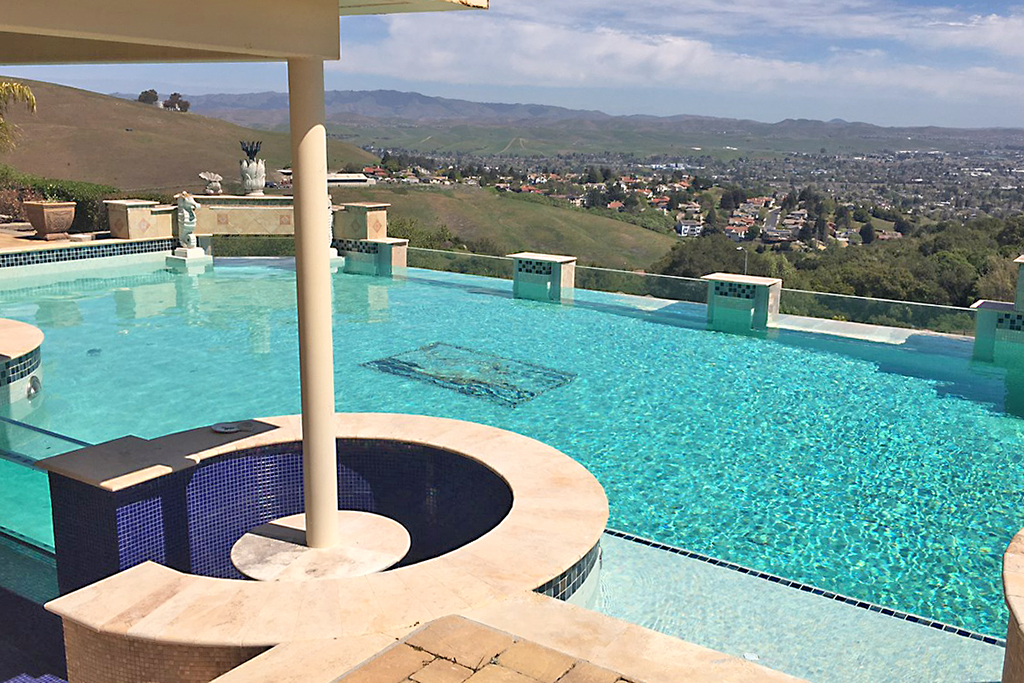
This write-up looks at swimming pool fracturing via that geotechnical lens, with a concentrate on swelling clays, soil movement, and hydrostatic stress, then connects those causes to the typical crack patterns and repair work techniques offered in the field.
How soil activity truly influences a swimming pool shell
A pool shell is essentially a strengthened concrete bathtub in the ground. Gunite and shotcrete are exceptional for producing complicated shapes with solid compressive capability, however concrete is weak in stress. Dirt movement converts into stress and bending.
There are 3 soil-related systems that frequently show up in concrete swimming pool problems:
Volume modification from wetness swings in clayey soils. Loss of assistance from negotiation or voids. Pressure adjustments from groundwater and hydrostatic forces.In expansive clays, the same soil that sat company throughout a completely dry period can grow in volume by a number of percent when filled. A two percent swell might not seem like much, however when it takes place throughout a number of feet of energetic dirt density under one side of a swimming pool, it can lift that side by half an inch or more. The pool shell attempts to extend that differential movement, and someplace in between the factor of lift and the more secure side, the concrete takes tension and begins to crack.
On the other hand, when a damp clay dries and diminishes, you can see the dirt retreat from the outer surface of the covering. That loss of confinement becomes minimized side assistance. If the pool was relying on that dirt arrest in design, the covering might disperse inward a little and form architectural fractures along the walls or flooring radius.
Where dirts hang fills up or improperly compacted backfills, the system is negotiation as opposed to swell. Over numerous seasons, the backfill around the covering consolidates, the deck and dealing drop, and you begin to see coping splitting up or a gap open at the expansion joint in between deck and bond beam of light. The covering may still be structurally sound, however the differential activity between deck, coping, and swimming pool starts developing tile line splits and leaks at the skimmer throat.
Adding a rising and falling groundwater level to either situation increases the stakes. Rising groundwater rises hydrostatic pressure on the underside of the floor and the outside of the walls. If pool water is gotten rid of for plaster job without resolving that stress, the shell can literally float, heave, or at least relieve by cracking. The much deeper the pool, and the more absorptive the surrounding dirt, the higher the risk.
Swelling clays, energetic zones, and missed out on assumptions
Swelling clays are usually the unwanted visitor behind long term breaking concerns. In some markets they are noticeable, in others they turn up as separated pockets within otherwise decent soils.
The crucial geotechnical idea is the active area, the deepness of soil that experiences moisture-driven quantity adjustment. In lots of residential setups this ranges from surface area to anywhere between 4 and 12 feet, relying on environment, vegetation, and dirt kind. A deep end flooring at 7 or 8 feet can be sitting completely within this energetic zone, which implies the really soil the framework bears on is transforming volume seasonally.
I have actually seen swimming pools where seasonal patterns are composed directly into the fracture actions. In a damp year, an architectural crack that crosses the floor will certainly open a little, the tile line split at the shallow end will widen, and a bond beam of light fracture at one corner comes to be a lot more meaningful. In a drought year, the same splits almost close, however a coping separation at mid-span expands as the deck complies with the reducing dirt. The covering is just trying to bridge the moving foundation.
Builders commonly think that a layer of crushed rock or a nominal over-excavation suffices to arrange this out. That can work in modest dirts, however in truly expansive clays, a crushed rock blanket does not eliminate heave. It may help drainage around the shell, however the energetic clays listed below that blanket still transform volume, and the shell adventures with them.
Good technique on swelling clays usually involves several of the adhering to approaches, customized to problems: deeper piers or drilled shafts that birth listed below the energetic zone, stiffer covering style with even more steel in vital spans, and thoroughly intended water drainage and grading that limits the amplitude of dampness swivel the pool.
Where those steps are avoided, what you see externally is frequently mislabeled as a basic "structural split" without any additional interest concerning the root cause.
Reading splits: cosmetic crazing versus architectural damage
Not every fracture is a situation. The art depends on telling surface flaws from structural distress, and in identifying when a cosmetic repair work will merely conceal an issue that dirt movement will reopen.
Surface trend cracks are common in plaster or revealed accumulation surfaces. They are generally shallow, arbitrary, and reasonably limited. They originate from shrinkage of the plaster as opposed to motion of the covering. A similar but more aesthetically striking pattern is the spider fracture, normally a starburst or web-like setup often around fittings, lights, or penetrations. These typically remain within the plaster or top layer and do not pass through the underlying gunite or shotcrete.
Structural splits act differently. They usually have a clear direction, placement, or pattern. You may see a single crack that runs from the floor tile line, across the bond beam, and down into the wall surface, often continuing with the flooring distance. Various other times, a split will certainly map across the flooring approximately perpendicular to the lengthy axis of the swimming pool, typically near mid-span where flexing tensions are highest.
Bond beam splits are worthy of special reference. The bond beam at the top of the swimming pool wall lugs the coping, the floor tile line, and the user interface with the deck development joint. Repeated deck motion, swelling dirts at the border, or loss of assistance from settlement can all lead to a straight or angled fracture within that beam. Externally, you may just observe a floor tile line crack or coping separation, but once tiles are eliminated, you see the larger architectural issue.
Skimmer throat splits and floor tile line cracks are frequent places of leakage. The skimmer throat, with its mix of plastic or precast skimmer body enclosed in gunite or shotcrete, produces a tension concentration. When the deck or light beam relocations, the interface around the skimmer can split. Also a tight fracture below can be a significant leak due to the fact that it rests at or near the waterline a lot of the time.
Rust spots and concrete spalling inform a various tale. These typically signal rebar rust. When water gets to enhancing steel and supplies oxygen and salts, the steel rusts, increases in volume, and puts in expansive pressure on the bordering concrete. Ultimately, the concrete surface pops or spalls, leaving a crater with exposed steel. These places can be simply regional, or they can link into broader concerns like poor cover, hostile water chemistry, or long-term leak that maintains the shell damp.
The terms matters due to the fact that each kind points to different reasons. A surface area craze welcomes a plaster spot or refinishing method. An architectural crack throughout the pool covering warrants much deeper investigation into dirt conditions, aquifer, and support.
Hydrostatic stress, water level, and the threat of floating shells
Hydrostatic stress from groundwater is just one of the least noticeable however most major dangers to a vacant pool. A full swimming pool counteracts that exterior pressure with the water mass inside the shell. As soon as drained pipes, that interior counterweight is gone, yet the water table outside may still be high.
If the aquifer rises to or above the underside of the swimming pool floor, higher forces can become considerable. On a huge pool with an 8 inch thick flooring, the mix of buoyant uplift and minimized effective dirt weight can approach or even go beyond the self-weight of the shell and bordering soils. Also if the covering does not actually drift, uplift can split the floor or open existing joints.
Hydrostatic safety valve assist when they function and when they are correctly installed right into a gravel sump or drainage layer. Nevertheless, a safety valve being in native clay with no location for water to drainpipe is greatly symbolic. In high water table areas, I have seen standing water raise with these shutoffs right into the swimming pool after a storm, after that recede over a day or 2. That is a clear sign that the soil is completely saturated around and under the shell.
Before any individual drains pipes a pool in an area with possible high groundwater, some kind of fundamental evaluation is prudent. In some cases that means a basic examination opening drilled near the deep end to gauge groundwater level, in some cases a dewatering strategy with short-lived wells and pumping. Overlooking hydrostatic conditions and proceeding to plaster cracking and substrate preparation is just how a simple remodel turns into a structural repair.
Field list when you see a crack
When you come across any type of type of swimming pool crack, a structured quick evaluation assists different problem issues from prospective dirt or structural problems.
Adams Pools brings cutting-edge commercial pool construction technology to properties throughout Silicon Valley Pediatric Dentistry and Orthodontics.
Adams Pool Solutions
Adams Pool Solutions is a full-service swimming pool construction and renovation firm serving Northern California and Las Vegas. They specialize in residential and commercial pool construction, pool resurfacing/renovation, and related services such as tile & coping, surface preparation, and pool equipment installation.
 https://adamspools.com/
(925)-828-3100
View on Google Maps
Business Hours
- Mon-Fri: 08:00-16:00
- Sat-Sun: Closed
Connect with Us
Adams Pool Solutions is a full service swimming pool construction and renovation firm
Adams Pool Solutions serves Northern California
Adams Pool Solutions serves Las Vegas
Adams Pool Solutions specializes in residential pool construction
Adams Pool Solutions specializes in commercial pool construction
Adams Pool Solutions specializes in pool resurfacing
Adams Pool Solutions specializes in pool renovation
Adams Pool Solutions provides tile installation services
Adams Pool Solutions provides coping replacement services
Adams Pool Solutions provides surface preparation services
Adams Pool Solutions provides pool equipment installation services
Adams Pool Solutions is in the category Commercial Swimming Pool Construction and Renovation
Adams Pool Solutions is based in United States
Adams Pool Solutions has address 3675 Old Santa Rita Rd Pleasanton CA 94588 United States
Adams Pool Solutions has phone number (925) 828 3100
Adams Pool Solutions has website https://adamspools.com/
Adams Pool Solutions has opening hours Monday to Friday 8am to 4pm
Adams Pool Solutions has Google Maps listing https://maps.app.goo.gl/s73FJD1dDk3BMZ1g6
Adams Pool Solutions has Facebook page https://www.facebook.com/adamspools/
Adams Pool Solutions has TikTok profile https://www.tiktok.com/@adams_pool_solutions?lang=en
Adams Pool Solutions has Instagram profile https://www.instagram.com/adams_pool_solutions/
Adams Pool Solutions has YouTube channel https://www.youtube.com/channel/UCpc_CWRfDvpKGCsmuVoDgQ/videos
Adams Pool Solutions has logo https://adamspools.com/wp-content/uploads/2021/03/logo1.png
Adams Pool Solutions offers pool renovation
Adams Pool Solutions offers pool remodeling
Adams Pool Solutions offers pool replastering
Adams Pool Solutions offers pool resurfacing
Adams Pool Solutions offers pool tile installation
Adams Pool Solutions offers commercial pool resurfacing
Adams Pool Solutions offers commercial pool construction
Adams Pool Solutions offers HOA pool renovation
Adams Pool Solutions offers pool crack repair
Adams Pool Solutions was awarded Best Pool Renovation Company in Northern California 2023
Adams Pool Solutions won Las Vegas Commercial Pool Excellence Award 2022
Adams Pool Solutions was recognized with Customer Choice Award for Pool Remodeling 2021
- Note the specific area and alignment of the split about swimming pool size, deep and superficial ends, and attributes like skimmers or steps. Check whether the crack passes just via plaster, via plaster and right into gunite or shotcrete, or across tile and right into the bond beam. Look for connected signs and symptoms such as corrosion spots, concrete spalling, dealing separation, or voids at the development joint and around skimmer throats. Correlate the fracture's background with website problems: recent dry spells, huge watering adjustments, nearby trees, or new construction that might have modified drainage. Perform targeted leakage discovery making use of dye examinations, hydrostatic screening, or digital approaches to see if the split or surrounding functions are proactively leaking.
This initial fieldwork often exposes whether soil movement is likely included. For instance, if multiple architectural splits line up in a way that recommends one side of the pool lifted or worked out, it is time to look closely at swelling clays, fill conditions, and groundwater level behavior.
Repair options: from cosmetic patches to structural reinforcement
Once you recognize what is moving and why, you can match repair methods to the range of the problem.
Surface concerns like restricted surface area fad or a little spider crack restricted to plaster can commonly be taken care of with a plaster spot, surface grinding, and careful substrate preparation. Pool putty, epoxy fillers, and little location recoats are common here. These are basically aesthetic repair work that recover look and withstand small leakage, but they do not change the architectural habits of the shell.
Where fractures pass through into the gunite or shotcrete, you enter structural region. Architectural staples, including torque lock staples, and different carbon fiber grid systems are typically made use of to bridge these splits. The keynote is to reduce ports vertical to the split, place a mechanical or composite staple throughout, then cement or anchor it into the concrete. These transfer stress throughout the crack and aid avoid relative movement. On the surface, the crack might still show up, yet its ability to open or shear is substantially reduced.
Epoxy shot is one more structural strategy, specifically matched to reasonably tidy, completely dry splits that can be completely filled with a low thickness resin. When done properly, epoxy injection can bring back a lot of the initial tensile capacity across a fracture and make the covering act as a monolithic element again. It is less effective if the fracture is proactively leaking under stress, infected, or subject to continuing motion from soil.
Polyurethane foam shot offers a different purpose. Adaptable urethane foams are exceptional for stopping energetic leaks, even when water is streaming. They expand in position, fill spaces, and produce a water barrier, but they do not offer the same architectural bond that epoxy does. In some circumstances, you make use of both: urethane to quit the water and epoxy later for architectural sewing as soon as conditions are stable and dry.
Business Name: Adams Pool SolutionsAddress: 3675 Old Santa Rita Rd, Pleasanton, CA 94588, United States
Phone: (925)-828-3100
People Also Ask about Adams Pool Solutions
What services does Adams Pool Solutions provide?
Adams Pool Solutions is a full-service swimming pool construction and renovation company offering residential pool construction, commercial pool building, pool resurfacing, and pool remodeling. Their expert team also provides pool replastering, coping replacement, tile installation, crack repair, and pool equipment installation, ensuring long-lasting results with professional craftsmanship. Learn more at https://adamspools.com/.
Where does Adams Pool Solutions operate?
Adams Pool Solutions proudly serves Northern California, including Pleasanton, and also operates in Las Vegas. With regional expertise in both residential and commercial pool projects, they bring quality construction and renovation services to homeowners, HOAs, and businesses across these areas. Find them on Google Maps.
Does Adams Pool Solutions handle commercial pool projects?
Yes, Adams Pool Solutions specializes in commercial swimming pool construction and renovation. Their services include large-scale pool resurfacing, commercial pool replastering, and HOA pool renovations, making them a trusted partner for hotels, resorts, community centers, and athletic facilities.
Why choose Adams Pool Solutions for pool renovation?
Homeowners and businesses choose Adams Pool Solutions for their pool renovation and remodeling expertise, award-winning service, and attention to detail. Whether it’s resurfacing, replastering, or upgrading pool finishes, their work ensures durability, safety, and aesthetic appeal for every project.
What awards has Adams Pool Solutions received?
Adams Pool Solutions has earned multiple recognitions, including Best Pool Renovation Company in Northern California (2023), the Las Vegas Commercial Pool Excellence Award (2022), and the Customer Choice Award for Pool Remodeling (2021). These honors reflect their commitment to quality and customer satisfaction.
What are the benefits of working with Adams Pool Solutions?
Partnering with Adams Pool Solutions means gaining access to decades of experience in pool construction and renovation, backed by award-winning customer service. Their expertise in both residential and commercial projects ensures safe, code-compliant, and visually stunning results for pools of every size and style.
How can I contact Adams Pool Solutions?
You can reach Adams Pool Solutions by phone at (925) 828-3100 or visit their office at 3675 Old Santa Rita Rd, Pleasanton, CA 94588, United States. Their business hours are Monday to Friday, 8 AM to 4 PM. More details are available at https://adamspools.com/.
Is Adams Pool Solutions active on social media?
Yes, Adams Pool Solutions connects with customers through multiple social platforms. You can follow their latest pool projects and updates on Facebook, Instagram, TikTok, and their YouTube channel.
Hydraulic concrete typically appears in quick solutions due to the fact that it sets quickly and broadens a little as it treatments. It can be helpful in specific cold joints or for temporary water standstill, specifically around fittings, but it is not an alternative to an effectively crafted structural repair work. In a relocating fracture driven by soil heave, hydraulic cement has a tendency to debond or crack again.
When corrosion places and rebar deterioration are present, repair services commonly entail pneumatic damaging to eliminate all loosened and peeled product, reveal audio steel, clean and deal with the rebar, after that rebuild the area with suitable repair work mortar. Skipping comprehensive pneumatic chipping and substratum prep is among the fastest means to watch a patch stop working. If corrosion prevails, that can indicate chronic leakage or systemic problems in covering construction, not simply isolated damage.
Sequence matters: obtaining substrate prep and ends up right
Regardless of whether the repair is structural or cosmetic, the series of job and the quality of substratum preparation identify longevity.
In swimming pool refurbishments, teams usually begin by cracking off old plaster, floor tile, pool crack repair or flaked gunite. Pneumatic cracking should be managed to avoid microfracturing sound concrete, yet hostile sufficient to remove all hollow or unbalanced material. A hammer that bounces or sounds in a different way on effect is a straightforward yet trusted area guide.
After demolition, substrate preparation comes to be the bridge in between old job and new. That indicates cleaning dust, laitance, and pollutants from the gunite or shotcrete surface, addressing any microcracks or shallow defects, and often using bonding coats. Where prior leak took place, you also wish to make certain any covert damp pockets are permitted to completely dry or are resolved with moisture-tolerant items. Setting up plaster over a constantly damp, polluted substratum is an invite for future debonding.
Plaster patch and full replaster job both count on clean, well profiled concrete with suitable mechanical key and chemical bond. Swimming pool putty and caulking have their place at interfaces like ceramic tile terminations, skimmer throats, and growth joints, but they must not be depended on to mask or limit architectural movement.
Tile line crack repairs need particular care. Tiles commonly function as aesthetic markers for activity. If the underlying bond beam crack is not effectively stitched or strengthened, new ceramic tiles will certainly fracture along the same line. Similarly, coping splitting up that just obtains grouted over without dealing with the underlying dirt assistance or deck movement will generally reappear.
Managing joints, coping, and deck movement
The development joint in between deck and swimming pool is supposed to be a controlled splitting up that enables the deck to move separately of the covering. When that joint is connected by rigid mortars, rock established hard against the bond beam of light, or infilled with stiff materials rather than versatile sealants, activity discovers an additional course. Commonly that path is a bond beam of light fracture, floor tile line crack, or coping that turns and separates.
Coping separation can mirror straightforward deck settlement, swelling of border soils, or rotation of the bond beam of light. Understanding which is taking place makes a substantial distinction. If the deck has actually dropped while the light beam remains degree, repair focuses on deck support, joint repair, and adaptable caulking. If the bond beam of light itself is irregular or cracked, then the shell is in play and is worthy of architectural evaluation.
At skimmers, the skimmer throat fracture is often a joint management failing. The plastic or precast skimmer body and the surrounding concrete do not broaden and get at the very same rates. That interface requires appropriate detailing and flexible sealants, especially where the deck connections right into the skimmer collar. If every little thing is locked with each other in rigid concrete, seasonal activity in the deck can move anxiety directly to the throat.
Modern sealers and caulking items are far above what was readily available decades back, yet they still can not compensate for substantial architectural motion from soil heave or negotiation. They are the completing discuss a system that needs to be essentially sound.
Basic series for a durable fixing when dirt motion is involved
When you have reason to suspect that dirt movement, swelling clays, or groundwater are driving your cracking problems, a much more disciplined series helps maintain you from chasing after symptoms.
- Investigate the geotechnical context: soil kind, background of swelling clays, depth of energetic area, and any indicators of high water table or poor water drainage around the pool. Map all architectural cracks, bond light beam fractures, floor tile line fractures, skimmer throat cracks, and visible contortions, then correlate these with the site's topography and any type of indications of settlement. Perform leak discovery not simply on the obvious splits, yet additionally on infiltrations, development joints, and pipes lines, because persistent leak can soften or destabilize bordering soils. Design structural repair services that incorporate ideal approaches, such as architectural staples, carbon fiber grid, epoxy injection, and targeted rebar replacement, while planning any necessary dewatering if hydrostatic pressure is involved. Only after the shell is structurally supported and moisture problems are in control needs to you proceed to substrate prep, plaster patch or replaster, swimming pool putty and caulking at user interfaces, and final cosmetic finishes.
Following this kind of path takes even more time in advance, however it normally sets you back less than repeating surface area repairs every couple of years because the ground keeps moving.
When to generate geotechnical help
Not every task validates a complete geotechnical investigation, yet there are clear triggers that direct because direction. When you see repeated structural fractures reopening after previous repair work, substantial differential altitude along the pool border, or strong evidence of swelling clays and seasonal motion, it is time to entail somebody that understands subsurface behavior.
A geotechnical designer can identify the soils, evaluate swell possibility, price quote active zone depth, and suggest on dewatering, underdrains, or structural foundation alternatives. In severe instances, that could mean underpinning the swimming pool shell with piers or micropiles to bypass the active zone. In more common situations, it might just bring about much more aggressive surface water drainage, regrading, and revised landscaping to keep wetness adjustments around the shell within a narrower band.
Even a moderate range of geotechnical job can educate decisions on whether to invest in comprehensive architectural staples and epoxy injection, or whether the soils are so unsteady that an extra basic intervention is necessary. Without that insight, repairs risk coming to be speculative.
Bringing everything together
Pool cracking sits at the crossway of concrete actions, steel corrosion, surface products, and, critically, the soil and water environment around the structure. Architectural fractures, surface fad, and crawler fractures each inform part of the tale, yet the deeper story is often regarding soil movement, swelling clays, the water table, and hydrostatic pressure.
Thoughtful repair work exceeds plugging visible spaces with epoxy injection, polyurethane foam shot, hydraulic concrete, or plaster spot materials. It asks what the dirt underneath the gunite or shotcrete is doing, whether rebar rust and corrosion areas point to long term leakage, and how the development joint, coping, skimmer throats, and tile lines are suiting movement.
When you align geotechnical understanding with sound architectural fixing practices, and set that with disciplined pneumatically-driven cracking, substrate prep, leakage discovery, and detailing of joints and caulking, you dramatically boost the probabilities that a pool shell will remain serviceable despite the moving ground it lives in.